
A piece I read in a magazine the other day encouraged me to change my attitude about the things on my to-do list—to see the work not as a chore but as an opportunity and a blessing. As we look at our final gardening tasks for the season, let’s “switch the O to an E”: focus not on the things we’ve “got” to do, but on the things we “get” to do. With gratitude for a garden in which to work and the health to do so, here are the tasks on my November garden list.
First things first, it’s time to put the lawn to bed for the season. If you haven’t already, it’s almost time for that final mowing for the year—for many, a reason to celebrate! Even for those of us who take pride in our lawns, repetitive tasks like mowing can get mundane by season’s end, and it’s good to take a break for a few months. If you haven’t yet applied your winterizing fertilizer, do so in conjunction with your final mowing. Pick up a bag of Scotts Turf Builder Winterguard at the nursery today and make sure your lawn is well-fed through the winter months.
After you’ve mowed for the last time, make an appointment to get your lawnmower serviced over the winter months. Or, if you do your own maintenance, be sure to put some fuel stabilizer in your fuel tank before your last mowing to keep ethanol from gumming up the inside of your engine while it sits over winter—or better yet, choose ethanol-free fuel each time you fill your fuel tank to keep your lawnmower engine in its best condition.
Second, it’s not too late to plant bulbs for spring color. Daffodils and tulips—along with other early spring favorites—add so much to the landscape early in the season, and every spring I talk to gardeners who wished they’d remembered to plant bulbs the previous autumn. Consider this your gentle reminder to pick up a few packs of bulbs at Vander Giessen’s and get some bulbs planted yet this month.
Third, November is the perfect time to prepare for winter weather by spraying tender plants with Bonide Wilt Stop, an organic anti-desiccant spray that helps to seal in moisture on plants’ leaves and prevent the freeze-drying effects of the northeast winds that can do so much damage in the winter months.
Wilt Stop works by covering your plants with a waxy film to protect from cold and dry conditions—think of it like chapstick for your plants! If you’ve ever struggled with nandina, hellebores, rhododendrons, or other broadleaf evergreen shrubs looking wind-burned after a cold winter, Wilt Stop can keep them healthy and looking their best through winter and into next spring. For best results, find a sunny, dry day to spray Wilt Stop on your plants to give it the chance to cure properly.
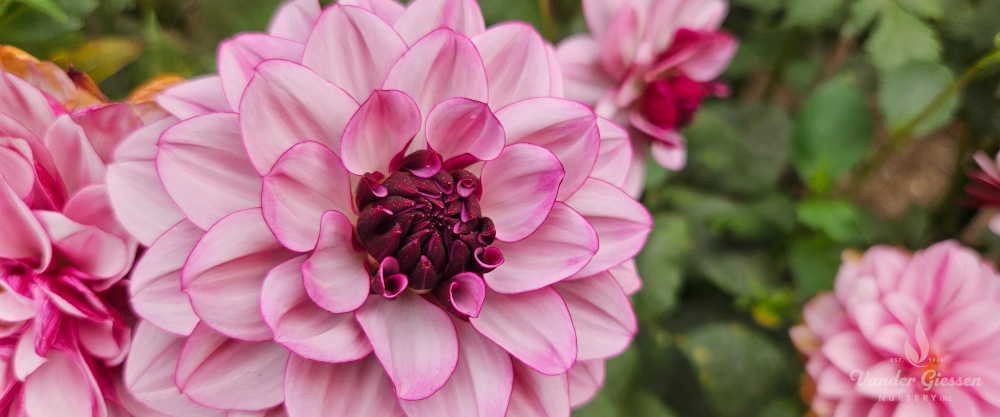
Fourth, if you haven’t already dug up your dahlia tubers and begun the process of storing them for winter, now is the time to do so—even though some areas haven’t yet seen a killing frost. Begin by chopping down your plants, marking each variety as you go so you can remember what was planted where. Then, carefully dig up the tuber clumps and wash the dirt off, being sure to get the tubers totally clean.
After washing, I recommend setting the tubers out on a tarp in a covered space like a garage or shop building to dry for a few hours or day—just until they’re dry to the touch. Don’t set the tubers out directly on concrete, as the concrete can actually pull moisture out of the tubers and damage them prior to winter storage.
Once the tubers are properly dried, and before packing the tubers away for winter, dust them with copper or sulfur fungicide dust to prevent mold or other fungus issues over winter. Then pack the prepared tubers in wood shavings, peat moss, or another loose material and store them in plastic tubs, bags, or other containers. Either before storage or next spring, you’ll have the opportunity to divide your tubers and share them with friends.
Finally, when you’ve finished the last of your gardening tasks around the yard, be sure to hose off your shovels, rakes and pruners for the season to keep them clean. Sharpen your pruners with a sharpening stone and wipe down any metal surfaces on your tools with oil to keep them looking their best and free from rust over winter.
With Thanksgiving just around the corner, I’m grateful for the garden I get to tend to each year and for the beauty and bounty the garden provides with each season. As we enter the slower months and a season of rest for the garden, let’s commit to changing our attitudes from “got to” to “get to”—to switch the O to an E.
Leave A Comment