
For those of us who love to garden, time spent working the soil isn’t a chore, but a joy. Even so, finding time to garden can be a challenge in today’s busy world. With a little effort in choosing the right plants, though, your garden can flourish with color and abundance with minimal time spent tending. Here are six of my favorite plants that bring all the rewards with none of the fuss.
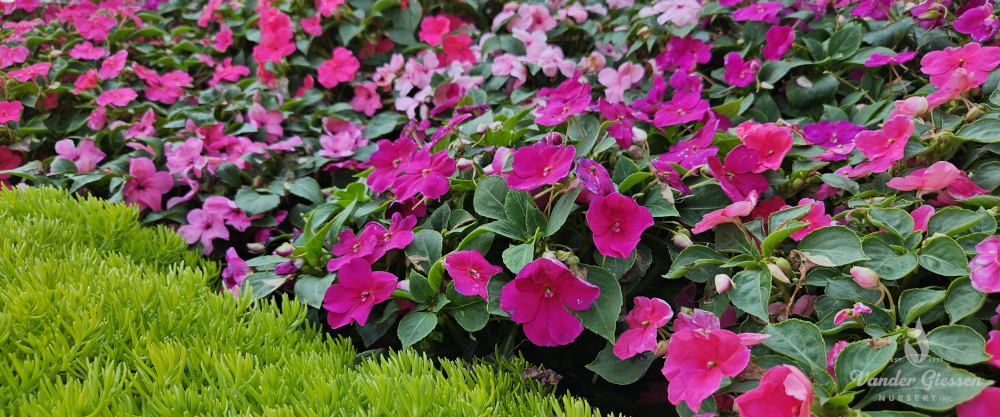
First on my list: impatiens. One of the most underutilized plants in gardens in our area, impatiens are carefree and versatile. Unbothered by bugs, and with newer introductions untouched by disease, impatiens don’t require any care other than water and fertilizer to keep blooming all summer and deep into autumn. Traditionally considered shade plants, impatiens can be grown in full, hot sun in our area as well—and if you don’t believe me, I dare you to try it this summer and see the results!
For the traditional impatiens look, I recommend growing Beacon varieties, newer introductions that have none of the susceptibility to impatiens downy mildew, a disease that used to wipe out older varieties in late summer. And for a more upscale look with larger, deep green leaves and bigger flowers, try Sunpatiens, a hybrid New Guinea-type that was specifically bred to be grown in sun but also does well in shady spots.
Next up: Megawatt begonias. Like impatiens, begonias are typically thought of as a shade plant, but wax-leaf varieties can be grown in full sun as well, making them suitable for any location in your garden. Normal wax begonias grow to around a foot tall and eight inches wide, but Megawatts take it to the next level—literally! Growing to over two feet tall and almost a foot and a half wide, Megawatts are one of those plants that will make you stop and look, and best of all, they’re the easiest plant to grow, with no bug or disease issues and minimal water needs. Blooming from spring to a hard frost, Megawatt begonias are a must-have for any gardener wanting easy color, especially when planted en masse.
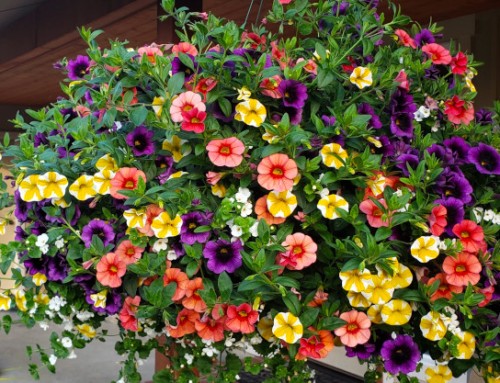
Third: petunias. I know, some of you are screaming, “But, deadheading!” Yes, old-fashioned petunias need to be deadheaded—or have their spent flowers removed—to keep them blooming through the summer, but not so with today’s newer varieties. The vast majority of the dozens of varieties of petunia you’ll find in any garden center today are what are referred to as “self-cleaning,” meaning the spent flowers fall off on their own and don’t set seed, the part of a petunia’s life cycle that would otherwise cause them to stop blooming.
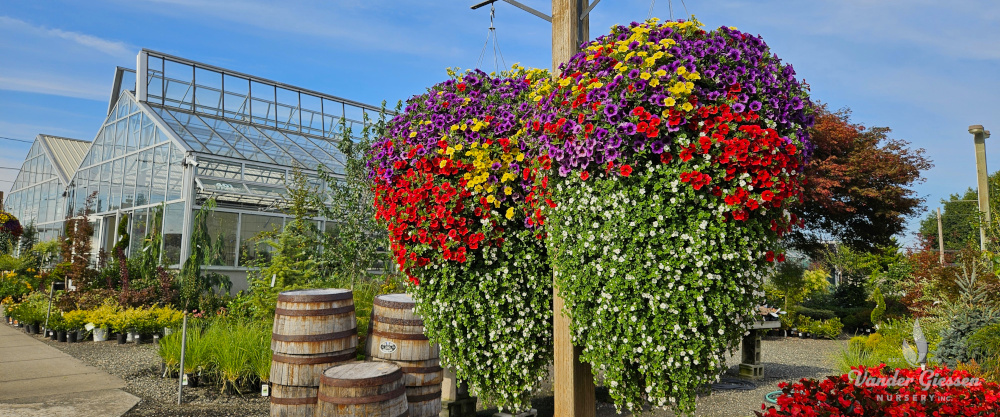
Additionally, most petunias sold today—especially those sold individually in larger 4-inch pots—are spreading or trailing varieties, which make them well-suited for both growing in containers and hanging baskets as well as creating mounds of spreading color in flowerbeds. Consider this: a single 4-inch spreading petunia will cover the same area as six, eight, or even ten of the old-fashioned petunias, with none of the deadheading those older varieties require, so I consider that a win-win!
Fourth: thunbergia, also known as black-eyed susan vine. This summer bloomer is a powerhouse of color, with almost no bug or disease issues. Fast-growing, black-eyed susan vine will race up a trellis, obelisk, or over an arbor through the summer, growing up to ten feet long in a matter of a couple of months. With prolific blooms in shades of yellow, pink, white, and orange, thunbergia is a must-have if you need something vining and want color that lasts longer than a clematis. Although it’s an annual, the cost of replacing thunbergia each spring is well worth the reward of a climber that blooms its heart out all summer and well into autumn.
Finally, it’s time to plant your vegetable garden, and there are so many great options that are easy to grow and rewarding for their fresh-from-the-garden flavor, but with the cost of groceries continuing to climb, it’s especially worth it to focus on growing varieties that are pricey in stores.
Cucumbers are one vegetable I love to grow—they’re fast-growing, produce for a long season, and can be grown up a trellis or in containers if your garden space is at a premium. Full-sized varieties like English Burpless or Marketmore Slicer are classic favorites, or you can grow snack-sized varieties like Diva if you’re looking for a variety that can be packed in a lunchbox or eaten straight off the vine.
In addition to vegetables, fresh herbs are often expensive to buy in the store but easy to grow yourself. One of my all-time favorites is Amazel basil, a long-lasting sweet Italian variety from Proven Winners that grows over two feet tall and produces loads of aromatic leaves all summer and as late as mid-October. Unlike other varieties, Amazel is highly resistant to the strains of downy mildew that often cause premature death in mid-summer, so you’ll enjoy an abundant harvest.
Gardening is a fun hobby for so many reasons, but none more thrilling than seeing your efforts produce a colorful show of flowers or a fresh harvest. And while any gardener loves a good challenge, it’s nice to go for some easy wins when time is tight or you just want the reward without the fuss.


Thanks, David! You write so well with such enthusiam…makes me want to buy everything you suggested! But I guess that’s the point 🙂
See you soon for more compost and plants!