

Fresh, juicy strawberries are coming into season, vegetable gardens are bursting into growth mode, and daylight hours stretch long into the evening—summer has arrived in the Pacific Northwest. While you may be slowly finishing the last of your spring planting of annuals in containers and flowerbeds, planting season is far from over. As the seasons change, June is an excellent time to shift focus to planting shrubs and perennials. Here are a few of my favorite plants for this season and tips to make the most of early summer in the garden.
Shrubs
First, if your yard could use a little extra early summer color, may I suggest butterfly bush? Now, to be clear, many of the older varieties of butterfly bush were listed as invasive years ago and have been removed from the nursery industry entirely. The varieties you’ll find in garden centers today, thankfully, are sterile, meaning their flowers don’t set viable seed that could spread into wild areas, so they’re both legal to sell and entirely safe to plant.
Moreover, many of today’s butterfly bush varieties are tidy, compact plants that grow to just two to three feet tall and wide, a far cry from the rangy, overgrown look of older varieties. With summer blooms that attract pollinators of all types, aromatic foliage that discourages foraging deer, and low water needs, butterfly bush check many of the boxes for gardeners in search of the perfect plant.
Another great plant for late spring and early summer blooms is weigela, especially ‘My Monet,’ a variegated variety that’s been one of my go-to plants for years. With pink blooms that show up in May and June, weigela is a great crossover plant to bridge the blooming gap between rhododendrons and hydrangeas in the garden. And while its blooms last for just a few weeks, the foliage is the main show anyway, with striking leaves showing hues of gray-green, creamy white, and pink throughout the spring, summer and early autumn. Growing to just two to three feet tall and wide, ‘My Monet’ is an excellent addition to gardens of any size.
Perennials
Next, June is the ideal month to focus on planting perennials in the garden, as warm soil allows the plants to get established quickly and garden centers are well-stocked with a wide assortment of plants in bloom and ready to plant. One of the most versatile perennials for the garden is heuchera, which can be grown in sun or shade, flowerbeds or containers, and comes in dozens of colors—everything except blue! With saucer-sized scalloped leaves, heuchera adds great texture to the garden and looks good year-round. One of my favorites is ‘Dressed Up Evening Gown,’ with near-black foliage that makes a great contrast with white-blooming shrubs; another more colorful option is ‘Primo Peachberry Ice,’ with bright peach-colored leaves wonderful for brightening up a shady spot in the garden.
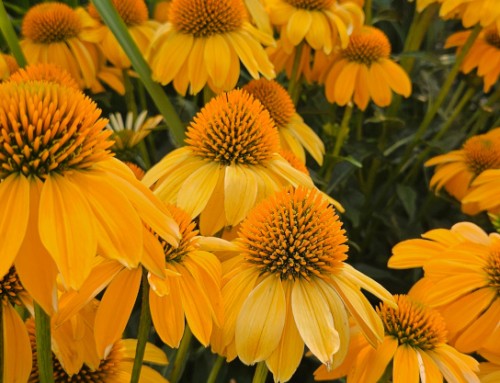
For many gardeners, they want plants that are easy to grow, provide color all season long, and come back year after year—but with many perennials, their blooms only last a few weeks. Not so, however, with two of my other favorites: coreopsis and echinacea. Both of these hardy perennials set fresh flowers all summer long and thrive with low water needs, great for gardeners who forget to water occasionally or have soil that dries out quickly. Once established, coreopsis and echinacea (commonly called coneflowers) take very little care and will come back with pollinator-friendly blooms for years to come.
Roses
Third, June is a great time to plant roses in your garden, as you can see and smell the plants in bloom at local garden centers before making your selections. With hundreds of options to choose from, roses can be hard to select, so being able to “test drive” the plants at a nursery can be helpful!
If you’re new to growing roses, know that they’re best planted in a location that gets direct sun all day long, has good air circulation, and is away from overhead sprinklers. In the right location and with good quality plants, roses really aren’t as hard to grow as their reputation often suggests, so enjoy the timeless beauty and classic fragrance these plants have to offer all summer long and find some space to plant a few roses.
Plant Care
With whatever you’re planting in your garden this month, your plants will get established the quickest with two simple additions and one habit: compost, starter fertilizer, and regular, deep watering. When planting, I recommend working some compost into the soil around your plants, which provides nutrients and helps to improve soil quality. Additionally, starter fertilizers like Bonide Root & Grow or Espoma Bio-Tone are formulated to help root systems develop quickly and reduce the stress of transplant, so I always recommend using starter at the time of planting to ensure your plants thrive.
And finally, plan to water regularly and deeply. Spraying your plants with a hose for a few seconds each day won’t do much good—either set up a soaker hose, install a drip system, or commit to hand watering so that with each watering the soil gets soaked down to a depth of at least four inches around each plant. Light, frequent watering does little to actually reach the roots of your new plants, so be sure that when you water you do so in a way that allows your plants to really drink.
As summer kicks into gear here in the Pacific Northwest, we have so much beauty to enjoy. And as you spend more time in the garden this season, make the most of all that your garden can offer by adding some extra beauty where it’s needed. Then sit back with a bowl of fresh strawberry shortcake—after all, what would be the point of summer without this sweet treat?


Leave A Comment