Fresh produce from the vegetable garden, warm summer sun, and the sweet aroma of raspberries hanging in the air: this is summer in Whatcom County. While there’s so much to love about this month, July can bring a number of challenges to your garden success if you’re not paying attention. To ensure your plants continue to thrive, here are a few tips for this month in the garden.
First, this year has been bad for bug issues—and it comes as no surprise given our mild winter. If you haven’t already, you’ll soon discover aphids or other insects around your garden. For vegetables, spray with neem oil or insecticidal soap for organic control, or if you want longer-lasting control, apply an insect dust like Sevin or Eight, which are both safe for edibles.
For control of aphids on ornamental plants, a hard spray of water may be enough to knock them off a mildly affected plant; interestingly, aphids don’t typically crawl back onto a plant after they’ve been dislodged. For fast, effective aphid control, though, I typically spray with a product like BioAdvanced Insect, Disease, and Plant Mite Control, which also helps control foliar diseases.
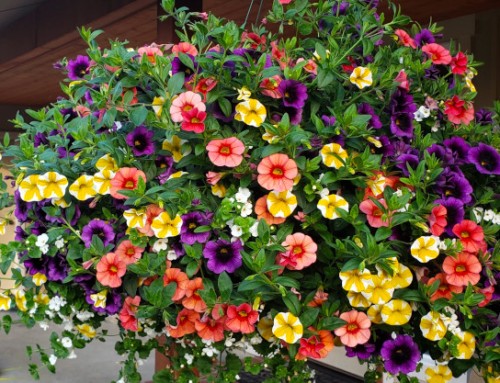
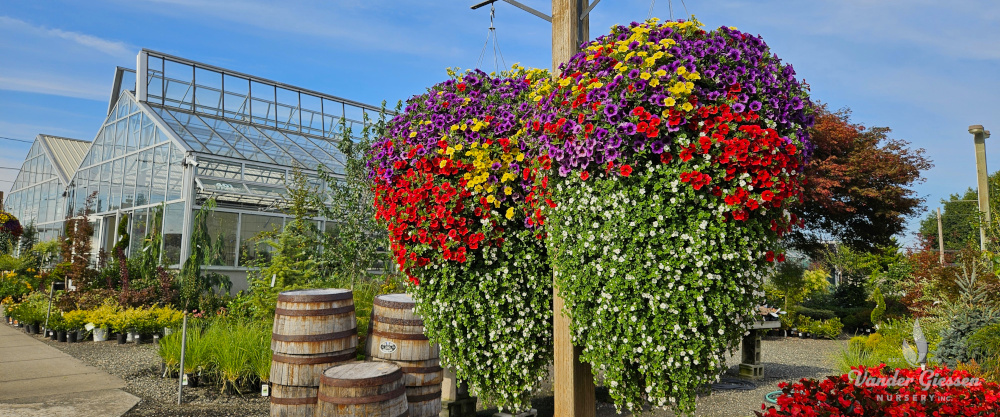
Another bug you’ll want to watch for as mid-summer rolls around is budworm, a pesky caterpillar that loves petunias, calibrachoa, and geraniums. I spotted the first munched-on petunias on one of my patio pots the other day, so it’s time to begin spraying to prevent damage on your planters and hanging baskets. For the best control, spray your plants every three weeks with Captain Jack’s Deadbug Brew, a safe, organic insecticide that’s proven very effective in killing budworm caterpillars.
Second, the swings between cool wet weather and hot, dry conditions we’ve experienced so far this summer can bring on some disease issues in the garden, so watch out for powdery mildew, especially on roses, dahlias, clematis, and lupines. Although there are around 1,000 unique species of powdery mildew, most common types show up as a dusty, white film on plant leaves, and left unchecked, can badly damage or even kill a plant.
If you spot powdery mildew on one of your prized plants, I recommend spraying with neem oil or BioAdvanced Insect, Disease, and Plant Mite Control, both of which help to kill mildew spores. Additionally, ensure that any watering you’re providing is focused at the soil, not on the leaves, as wet foliage can harbor and spread the disease. For additional control, prune or thin your plants to improve air circulation, which helps lessen disease pressure. In many cases, once more consistently warm, dry weather arrives, mildew pressure lessens, so if you get control of the disease early, you won’t be battling it all summer long!
Third, July can be a make-or-break month for plants when it comes to nutrition. If you haven’t kept up with fertilizing up to this point or you’ve used a cheap, low-quality fertilizer, your hanging baskets are probably really suffering. For the best results, I wholeheartedly recommend Jack’s Classic fertilizers, a line of water-soluble plant foods that deliver high-quality ingredients to keep your plants happy all summer and deep into autumn.
For feeding annuals and hanging baskets, alternate each week between Jack’s All Purpose for balanced feeding and Blossom Booster for higher phosphorus to encourage flower development. As a bonus, Blossom Booster can be used on fruiting vegetables like tomatoes and peppers to increase your yields, too!
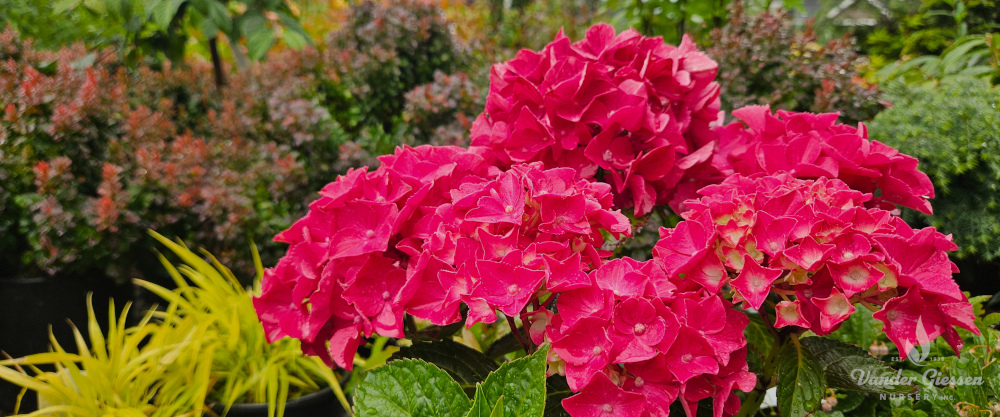
Finally, by July you can typically tell which plants are the standouts in the garden…and which ones aren’t. Even the best gardeners sometimes fail, and while operator error is a real thing, sometimes plants just don’t live up to expectations. If your yard could use some fresh interest and you want something that will come back year after year, dwarf hydrangeas are always a good option, and two that I’ve fallen in love with over the last year are ‘Bubble Bath’ and ‘Drama Queen.’
Introduced to the garden industry by a local grower just north of the border in Abbotsford, these two hydrangeas are proven to thrive in our climate and each have unique characteristics. Bubble Bath is a dwarf panicle hydrangea—like the ever-popular Limelight in miniature. Growing just two to three feet tall and wide, Bubble Bath is a powerhouse of blooms, with lime-green blooms covering the plant so fully in summer it’s hard to see the leaves! Perfectly-suited to full sun or part shade, this is one of the most impressive hydrangeas I’ve ever seen.
Drama Queen, itself an impressive specimen, is a traditional mophead or macrophylla hydrangea, with large round blooms in shades of pink or purple. This dwarf variety grows to just three feet tall and wide, and best of all, it’s a strong rebloomer, putting out fresh flowers from June through early autumn. Given its reblooming characteristic, Drama Queen can be pruned in fall or early spring without sacrificing flowers.
Gardening is never without its challenges—but really, for a gardener, half of the skill is in adapting to changing conditions and half of the fun is in proving yourself able to make your garden grow in spite of the challenge. Equipped with the right tools for battle and an enthusiasm to try something new, you can have a garden that looks good all summer long. Now if you’ll excuse me, I have some petunias to go spray.


Leave A Comment