
Early autumn in Pacific Northwest is arguably the best time of year–cool, crisp mornings, warm sunny afternoons, and the return of occasional rains to help water the garden as you enjoy the waning days of harvest and summer’s final wave of blooms. Additionally, early autumn is the best time of year to plant, whether shrubs, trees, or perennials, and offers the opportunity to refresh your planters for a new season. As you shift into a new season in the garden, here are some tips to make the most of early autumn outdoors.
First, by September the flowers you planted in April or May are probably looking tired, even if you’ve been diligent with watering or fertilizing. As the days get markedly shorter—over the course of September we’ll lose over 100 minutes of daylight in Whatcom County—summer annuals begin to shut down, producing fewer flowers, growing more slowly, and becoming more susceptible to insect and disease pressures.
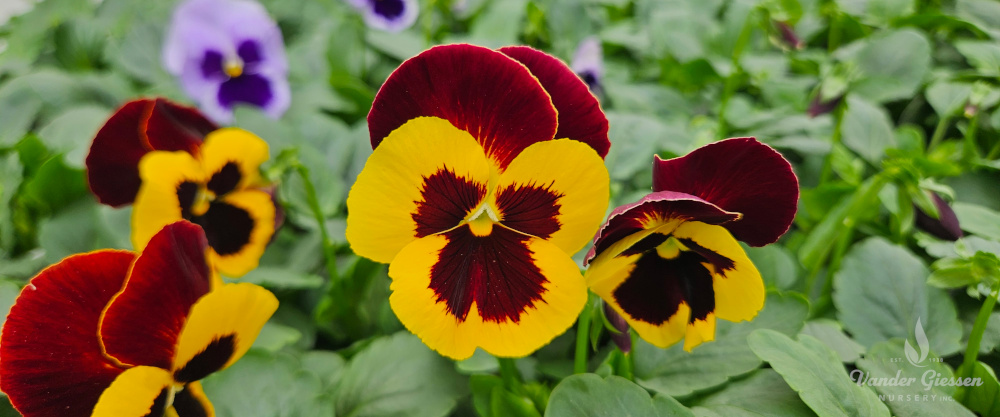
Thankfully, there’s plenty of time left to enjoy color on your porch or deck, and September is the perfect time to replant your pots for a new season. Brand new this year to the plant world are Top Wave pansies, cold-hardy winter pansies with a great trailing form. Perfect for use in hanging baskets or as spiller in the front of a container, Top Wave pansies have the large flowers of traditional winter pansies and stay full on top, even as they trail out of a basket.
Winter pansies—whether Top Wave or traditional mounding varieties—are my go-to for fall and winter color in containers or flowerbeds, simply because of their hardiness. Able to withstand temperatures down to -10F, pansies won’t flinch at a frost and only go dormant for winter once we’ve seen a deep freeze. Last winter, pansies never stopped blooming in our area, and even when they go dormant, they bounce back again in early spring and are some the first color you’ll enjoy seeing in your pots or garden. Available in a wide range of colors and needing very little care, pansies are a must-have for gardeners of any skill level. Stop in to check out our wide selection of home-grown pansies available at the nursery all through autumn!
Next, no fall front porch display would be complete without chrysanthemums. Unfortunately, mums are often overlooked because gardeners have had a bad experience with the flowers lasting only a couple of weeks, but that problem can be avoided altogether if you know what to look for.
Sadly, many consumers fall prey to the full-bloom mums they see in box stores starting in mid-August, and yes, those plants will only last a couple of weeks. When temperatures are warm early in the season, mums “blow out” quickly, and they don’t rebloom. If, however, you hold off and buy mums that are just starting to show the first hints of color in mid-September or later, their flowers will last more than twice as long, holding color well into late October or even November. At Vander Giessen’s, we grow a great variety of late-blooming mums to ensure your fall displays look good all season.
For even longer-lasting color, I’ve found that moving my mums to my shaded front porch once the buds are approximately half open keeps the plants looking great from the first blooms opening in late September all the way to Thanksgiving. With this in mind, buy plants that are just starting to bloom in mid-September and you’ll enjoy color all through the autumn season.
Beyond seasonal color, September is the ideal time to tackle landscaping projects around your yard. Have some of your shrubs gotten overgrown and need to be replaced? Early autumn is the best time of year to plant, with soil temperatures still warm from summer sun helping plants to get rooted and well-established before winter. Although spring is when we tend to get the most excited about planting—walk into any garden center on the first sunny weekend in March and it looks like a herd of cows let out to pasture for the first time in spring!—any wise gardener can tell you the benefits of planting in fall for long-term success.
Whatever you’re planting this fall—from small perennials up to stately shade trees—be sure to amend the soil with some compost to help provide nutrients and hold moisture between waterings. Additionally, I highly recommend using a starter fertilizer at the time of planting. Espoma Bio-Tone is my go-to plant starter, with mycorrhizae incorporated, which is a beneficial fungus that reduces the stress of transplant and effectively extends the root system of any plant to help with water and nutrient uptake.
Finally, if your lawn could use some love after a summer of neglect or kids playing on it, September is the ideal time to overseed or replant a lawn. To help rejuvenate a weak or stressed lawn, aerate or lightly thatch to remove some of the dead grass and “open up” your turf, then spread fresh grass seed and seed starting fertilizer. Finish with a light dusting of compost—my preferred compost for this application is Cascade Compost, a finely-textured blend made locally from yard and kitchen waste and available in bulk or bags at the nursery. After completing these steps, keep your lawn lightly moist and new grass will sprout in five to seven days.
As much as I love spring and summer, early autumn is my favorite time of year, with a little slower pace in the garden and the opportunity to give my containers and garden a fresh look and a great head start on next year. While the sun is still shining, make the most of these early autumn days and enjoy playing in the dirt!


Leave A Comment